
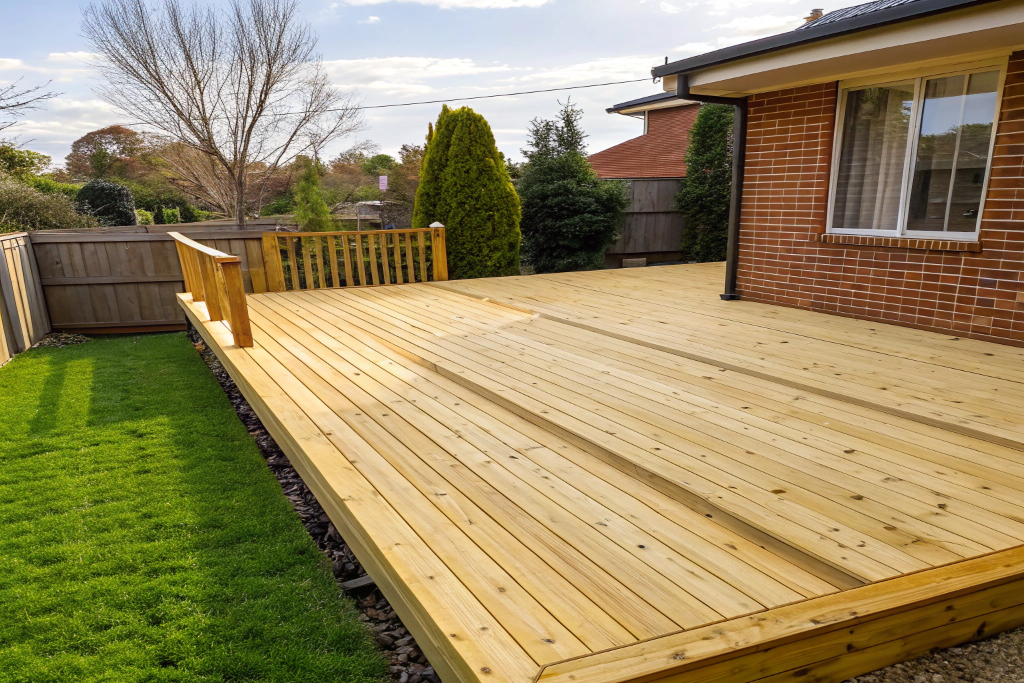
Is treated pine good for decking in Australia?
Yes — treated pine is one of the most widely used decking timbers in Australian residential construction, and for good reason.
- Cost-effective: Comes in significantly cheaper than hardwood alternatives like merbau or spotted gum, making it accessible for a wider range of budgets
- Treatment protection: Available in H3 (above-ground) and H4 (in-ground contact) ratings, giving Adelaide homeowners the right level of protection for their specific application
- Easy to work with: Cuts, fixes, and finishes cleanly — reducing labour time and installation complexity
- Finish flexibility: Takes paint, stain, and decking oil well, giving you full control over the final appearance
- Readily available: Stocked across Adelaide’s timber suppliers, meaning no delays sourcing materials for your build
Regular oiling or staining every one to two years keeps a treated pine deck looking sharp and performing well — straightforward upkeep for a long-lasting result.

Why Treated Pine Is Adelaide’s Most Popular Decking Timber
Treated pine has been Adelaide’s most popular decking timber for decades — and it comes down to one simple thing: it does the job well without costing a fortune.
Hardwood timbers like merbau and spotted gum look great, but they carry a price tag that’s out of reach for a lot of Adelaide families. Treated pine gives you a solid, well-protected timber that handles Adelaide’s conditions and suits a wide range of deck styles — at a price that leaves room for the rest of the project.
It’s available at virtually every timber supplier across Greater Adelaide, which keeps things moving once the build starts.
For homeowners in Morphett Vale, Golden Grove, Munno Para, and similar suburbs — where outdoor entertaining matters and budgets need to work hard — treated pine is the sensible first choice, not a fallback.
Understanding Treatment Ratings — H3 vs H4 Explained
Not all treated pine is the same. The timber comes in different treatment ratings, and picking the right one for your deck matters.
The two ratings Adelaide homeowners need to know about are H3 and H4.
H3 treated pine is designed for above-ground use — deck boards, handrails, and framing that sits clear of the ground and isn’t in direct contact with soil or moisture. It’s the standard choice for most residential deck builds across Adelaide.
H4 treated pine is treated to a higher level and built for in-ground contact — posts and footings that go into the soil. Adelaide’s outer northern suburbs and the Hills Face Zone carry a higher termite risk, and H4 treatment gives those structural elements the protection they need in those conditions.
Getting the rating right means your deck is protected where it needs to be — without overspending on treatment levels your build doesn’t require.
What Quality Treated Pine Construction Involves
The timber you choose matters — but how it’s built matters just as much. A well-selected treated pine deck that’s poorly constructed won’t last. Here’s what quality installation actually looks like.
Subframe Sizing and Australian Standards
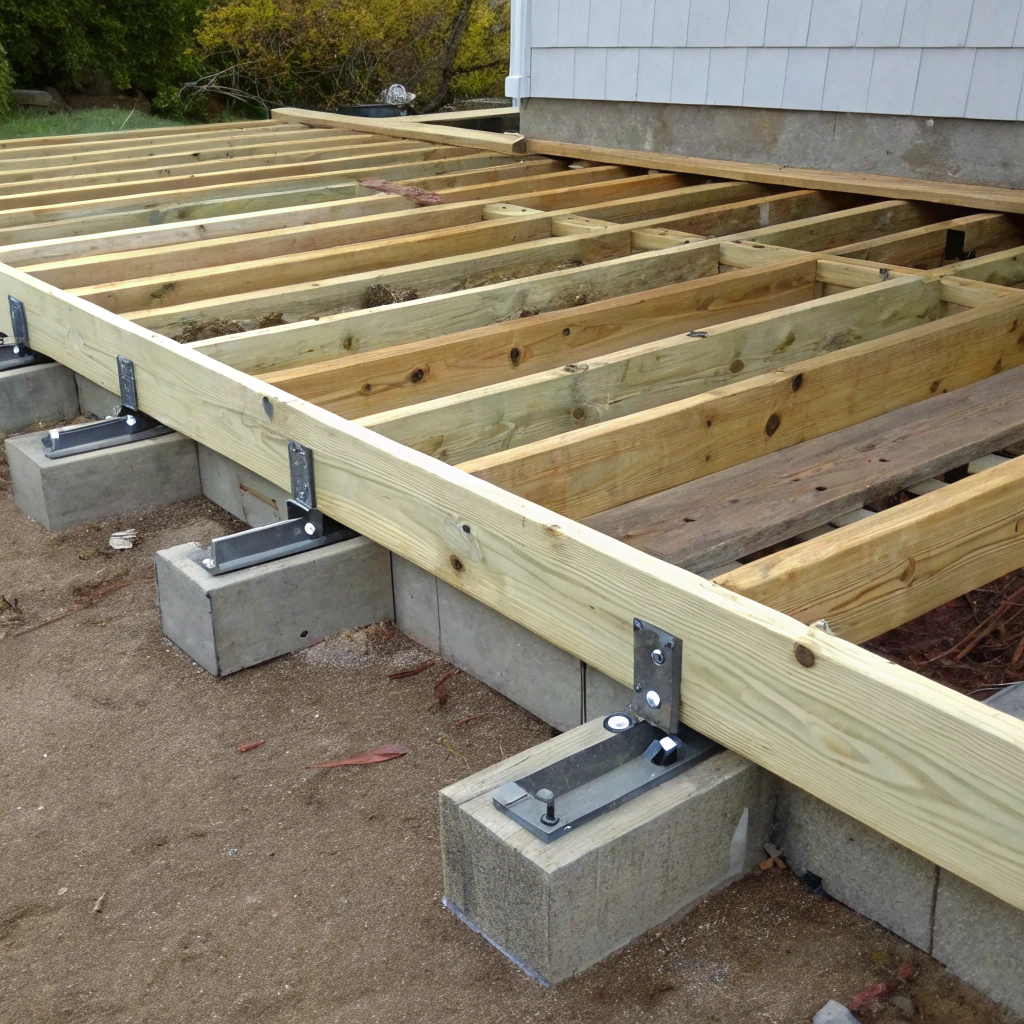
The subframe is the structural skeleton your deck boards sit on. Joists and bearers need to be correctly sized for the span they’re covering — undersized framing flexes, bounces, and breaks down faster. All subframe work should meet Australian Standards (AS 1684) for residential timber construction, giving you a deck that’s structurally sound from the ground up.
Board Selection for Above-Ground Applications
Deck boards should be H3 rated for above-ground applications — the right treatment level for boards that are exposed to weather but not sitting in soil. Board thickness and width affect both appearance and performance, and getting this right at the selection stage saves problems later.
Correct Fixing Hardware
Timber moves with Adelaide’s heat and humidity cycles. Using the wrong fixings — particularly non-galvanised screws or nails — leads to rust staining, board movement, and premature failure. Hot-dipped galvanised or stainless steel fixings are the correct choice for outdoor timber construction in South Australia.
Adelaide-Specific Considerations for Treated Pine Decks
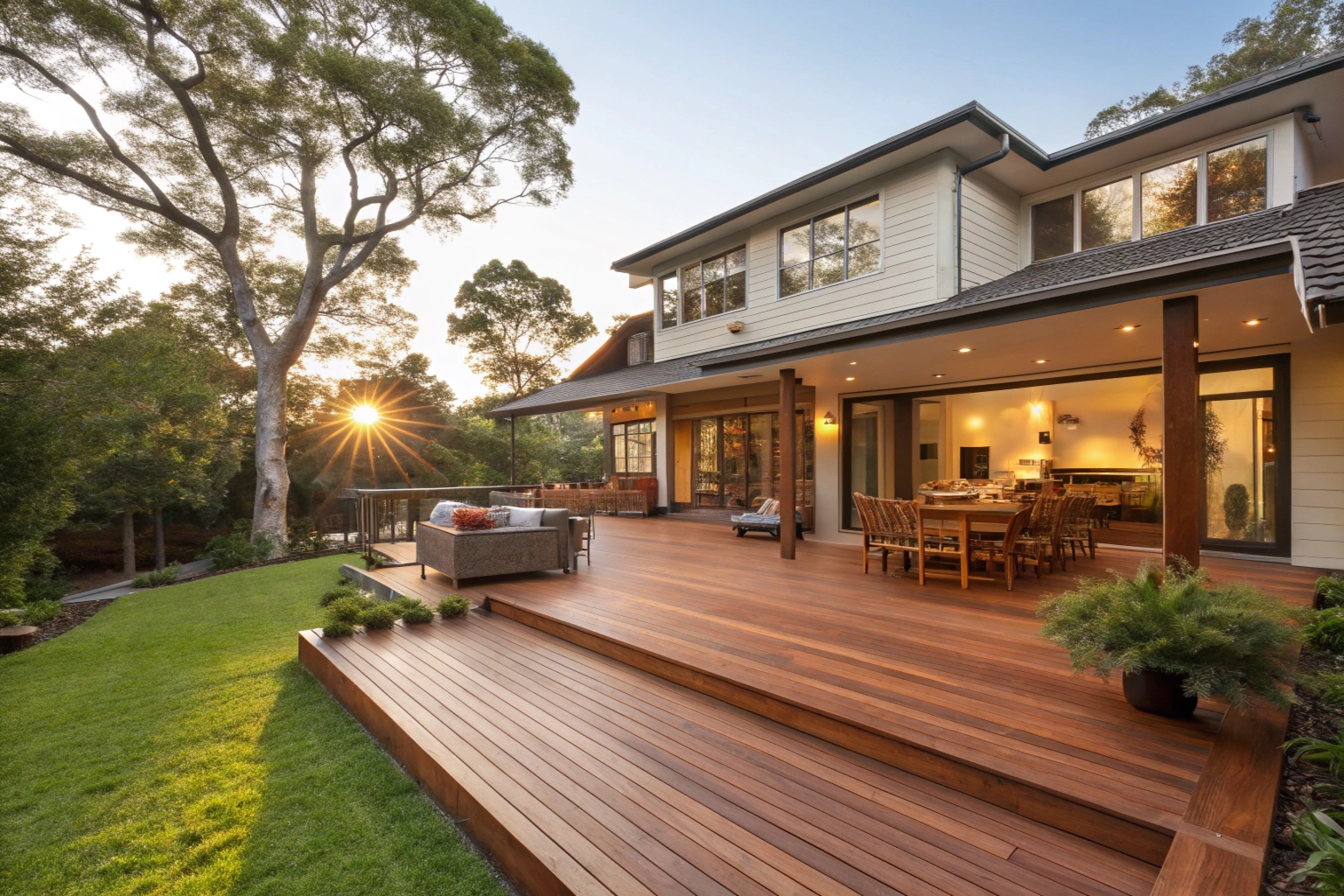
Adelaide’s climate and geography create a couple of specific conditions worth knowing about before you build. Here’s what applies to treated pine decks in particular.
Termite Risk in Hills Face Zone and Outer Northern Suburbs
Termite activity is a real consideration in parts of Greater Adelaide — particularly the Hills Face Zone and the outer northern suburbs including Salisbury and Elizabeth. In these areas, any timber that makes ground contact — posts, footings, and stumps — should be H4 treated pine as a minimum. H4 treatment is specifically designed to resist termite attack and decay in in-ground conditions. Skipping this step to save a small amount on materials is a false economy when structural posts are involved.
UV Exposure and Heat Across Adelaide’s Northern Plains
Adelaide’s northern suburbs cop some of the harshest UV exposure in the metro area. Unfinished or poorly finished treated pine will grey off, dry out, and crack faster in these conditions. A quality finish — whether oil, stain, or paint — applied before the deck sees its first summer makes a significant difference to how the timber holds up over time. We’ll cover finish options in the next section.
Finish Options — Paint, Stain, or Decking Oil
Once your treated pine deck is built, the finish you choose affects both how it looks and how much maintenance it needs down the track. There are three main options.
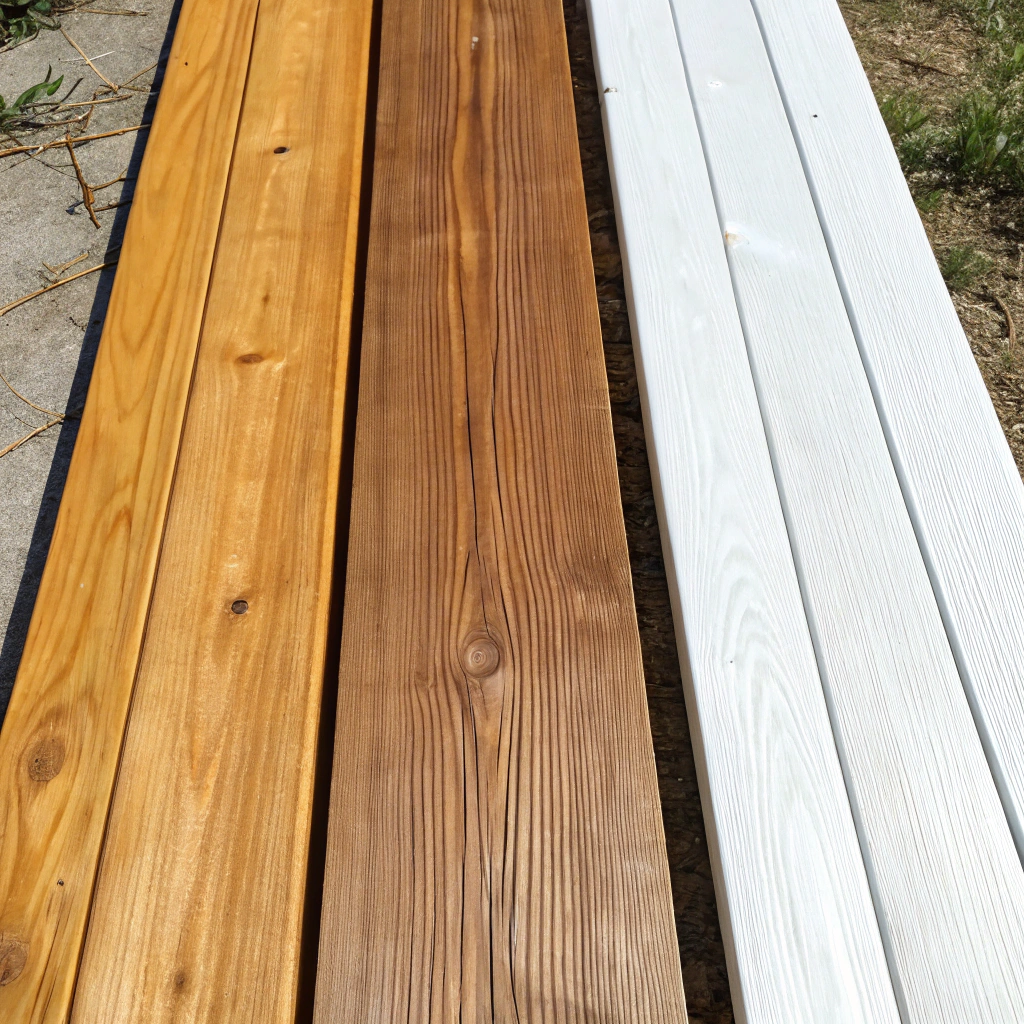
Decking oil soaks into the timber and feeds it from within, giving a natural, warm appearance that enhances the wood grain. It’s the most popular choice for homeowners who want a classic timber look. Oil needs reapplying every one to two years depending on sun exposure — but it’s a straightforward job most homeowners handle themselves.
Deck stain sits slightly on the surface and comes in a range of colours, from clear through to solid tones. It offers a bit more UV protection than oil and lasts a touch longer between applications. Good middle ground between the natural look of oil and the full coverage of paint.
Paint gives the most complete protection against UV and moisture and requires the least frequent recoating. It fully conceals the timber grain, which suits some homes and styles better than others. Touch-ups are needed when the surface chips or peels.
There’s no single right answer — the best finish depends on your home, your suburb, and how much maintenance you want to take on. We’re happy to talk through the options when we come out for your quote.
Board Spacing, Drainage, and Airflow
How your deck boards are spaced is one of those details that doesn’t get much attention — but it has a big impact on how long your deck lasts.
Treated pine boards need a small, consistent gap between them — typically around 5mm — to allow rainwater to drain through and air to circulate underneath. Adelaide gets intense summer heat followed by winter rain, and that cycle puts timber through its paces. Without proper spacing, water sits on the surface and between boards, accelerating rot and decay.
Airflow underneath the deck matters just as much. A subframe with poor ventilation traps moisture against the timber, which speeds up deterioration from the inside out — damage that’s invisible until it becomes a structural problem.
Poor spacing also causes cupping and warping as boards swell and have nowhere to move. Correctly spaced boards from day one means your deck handles Adelaide’s seasonal conditions the way it’s supposed to — draining cleanly, drying out properly, and staying flat.
Adelaide Suburbs Where We Build Treated Pine Decks
Decking Adelaide Specialists build treated pine decks right across Greater Adelaide — from the southern suburbs through to the northern growth corridors and out into the Hills.
In the south, Morphett Vale, Reynella, and Hackham are among our busiest areas — established family homes on good-sized blocks where a quality deck transforms the backyard. Further north, Munno Para, Angle Vale, and Salisbury see strong demand from new build homeowners finishing off their outdoor areas.
Golden Grove, Tea Tree Gully, and Modbury in the northeast, and the Hills suburbs of Stirling, Aldgate, and Bridgewater round out our regular service area.
Wherever you are across Greater Adelaide, we come to you — honest advice and a clear quote with no pressure.
Frequently Asked Questions
A well-built treated pine deck with the correct treatment ratings and a quality finish will typically last 15 to 25 years in Adelaide’s climate. Regular oiling or staining every one to two years makes a significant difference to lifespan.
H3 is for above-ground use — deck boards and framing that stays clear of the soil. H4 is for in-ground contact — posts and footings that go into the ground. We use the right rating for each part of the build.
Yes. The timber preservatives used in modern treated pine are fixed into the wood and don’t leach out under normal outdoor conditions. It’s a safe, widely used material for residential decks across Australia.
It depends on the size and height of the structure. In South Australia, decks over a certain size or height threshold require a building consent. We can advise you on what applies to your specific project during the on-site quote.
We recommend oiling or staining every one to two years, depending on how much sun and weather exposure your deck gets. Adelaide’s northern suburbs and elevated Hills properties tend to need more frequent attention due to UV intensity.
Yes. Paint is a perfectly valid finish for treated pine and offers strong UV and moisture protection. It fully covers the timber grain, which suits some home styles well. We’re happy to talk through finish options when we visit for your quote.
Get Your Free On-Site Quote for Treated Pine Decking in Adelaide
If you’re ready to build a treated pine deck that’s done properly — right materials, right treatment ratings, right construction — Decking Adelaide Specialists are ready to help.
We come to you anywhere across Greater Adelaide, assess your site in person, and give you a clear, honest quote with no obligation. No guesswork, no surprises — just straightforward advice and quality work from subframe to boards.
Here’s how it works:
- Contact us — call or fill in the form below
- On-site assessment — we visit your property across Greater Adelaide at a time that suits you
- Receive your quote — clear pricing, honest material guidance, no pressure
