

What Types of Shade Structures Can Be Installed in Adelaide?
Adelaide homeowners can choose from a broad range of shade structure types — from entry-level sail installations through to fully motorised outdoor room systems.
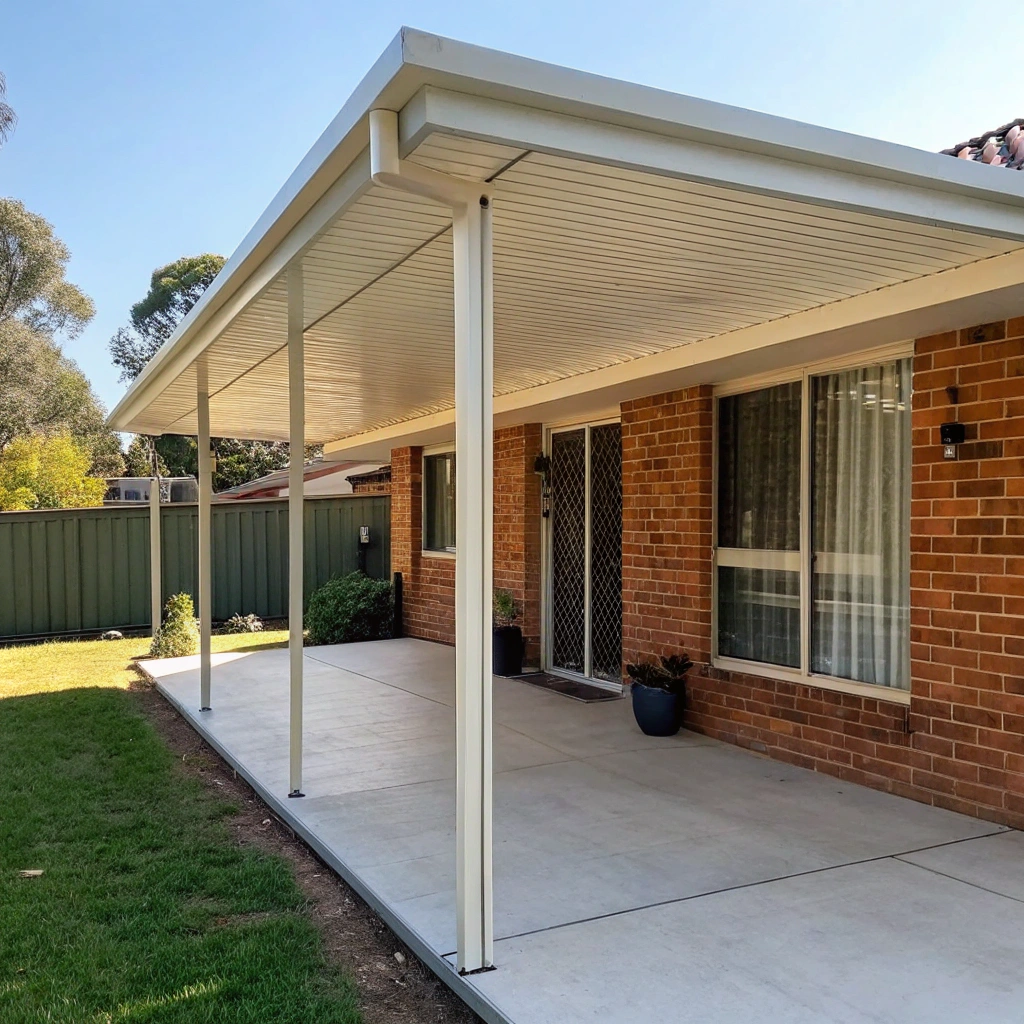
- Attached pergolas and patio covers — fixed to the home’s roofline, available in timber or powder-coated aluminium
- Freestanding pergolas — independent structures suited to pool surrounds, garden zones, or areas away from the main home
- Colorbond patio covers — full weatherproof roofing in skillion or gable profiles, well suited to Adelaide’s winter rainfall
- Polycarbonate roofing panels — let natural light through while blocking UV, popular for alfresco extensions
- Motorised louvre roof systems — adjustable blade systems that open and close with the weather, the premium outdoor room solution
- Shade sail installations — multi-point fabric sails suited to compact inner-suburban yards
- Shade cloth structures — cost-effective UV protection for pool surrounds and play areas
Structure selection depends on your property’s orientation, block size, and what’s permitted under South Australia’s Planning and Design Code.

Choosing the Right Materials for Adelaide’s Climate
The material your shade structure is built from determines how it looks, how long it lasts, and how much work you’ll put into maintaining it. Adelaide’s climate is hard on outdoor structures — extreme UV, dry summer heat, and coastal salt air in the western suburbs all take a toll over time. Here’s how the main options stack up.
| Material | Best For | Maintenance Level | Adelaide Climate Rating | Typical Lifespan |
|---|---|---|---|---|
| Treated Pine | Budget-conscious builds, natural look | Medium — oiling and sealing required | Moderate — needs UV protection | 15–20 years with maintenance |
| Hardwood Timber | Premium natural aesthetic | Medium-High — regular oiling | Good — naturally durable but UV-sensitive | 20–30 years with maintenance |
| Powder-Coated Aluminium | Low-maintenance, contemporary homes | Low — wash down occasionally | Excellent — resists UV, heat, and coastal salt | 25–40 years |
| Colorbond Steel Roofing | Full weatherproof coverage | Low | Excellent — heat-reflective, rust-resistant | 25–40 years |
| Polycarbonate Roofing | Light-filled alfresco areas | Low-Medium — panel quality varies | Good — UV-blocking but heat retention varies | 10–20 years depending on panel grade |
| Motorised Louvre System | Premium outdoor rooms | Low — annual service recommended | Excellent — engineered for Australian conditions | 20–30 years |
| Shade Sail Fabric (HDPE) | Compact yards, budget shade | Medium — re-tensioning, cleaning | Good — UV-rated but colours fade over time | 10–15 years |
| Shade Sail Fabric (PVC Coated) | Waterproof coverage needed | Medium | Good — waterproof but less breathable | 10–15 years |
Orientation and Sun Path — Designing Shade That Actually Works
A shade structure built in the wrong spot, or with the wrong roof type for its orientation, won’t solve the problem. Getting orientation right before anything is designed or priced is what separates a structure that genuinely extends your outdoor season from one that still leaves you retreating inside by midday.
West-facing areas across Adelaide’s flat northern and southern suburbs cop the worst afternoon heat — a solid roof or motorised louvre system is almost always the right call here. North-facing entertaining areas get strong overhead sun through the middle of the day and respond well to most roofing types. East-facing decks on Hills face zone properties need afternoon shade as the sun swings west. South-facing areas in inner Adelaide suburbs like Norwood and Prospect typically need wind protection more than sun shading.
An on-site consultation accounts for all of this before a single measurement is taken

Structural Considerations and Installation Process
The visible part of a shade structure is what homeowners focus on — but what’s underneath and behind the walls determines whether it stays solid for decades or starts moving within a few years.
Footing Design for Adelaide’s Reactive Clay Soils
Adelaide’s suburban plains sit on reactive clay soil that swells when wet and shrinks when dry. Under AS 2870, most Adelaide Plains sites are classified M or H class. Footings set to the wrong depth will shift with the seasons — leading to leaning posts and structural failure over time.
Attaching Structures to Adelaide Homes
Adelaide homes span three main construction types — solid brick masonry, brick veneer, and lightweight framed. Each requires a different fixing method. Incorrect attachment is one of the most common causes of structural failure in DIY and low-quality installations, and can cause damage to the home itself.
Roof Pitch, Drainage, and Wind Load
Adelaide’s winter rainfall means a flat roof will pool water and leak. Adequate pitch keeps water moving toward the gutters. For exposed coastal sites in Semaphore, Glenelg, and Henley Beach, and elevated Hills face zone properties, wind load engineering keeps the structure safe and supports council approval applications.
How Much Does Shade Structure Installation Cost in Adelaide?
Cost varies significantly depending on structure type, size, materials, and site conditions. Below are realistic price ranges for the most common shade structure installations across Adelaide.
Shade Sail Installation Cost
Shade sail installation is the entry-level option. A standard residential sail typically starts from $800–$2,500 depending on size, fabric grade, and the number of fixing points required. Custom shapes and additional anchor posts add to the cost.
Colorbond and Polycarbonate Patio Cover Cost
Colorbond and polycarbonate patio covers sit in the mid-range. Most residential installations fall between $8,000–$20,000 depending on linear metres, roof profile — skillion or gable — and whether the structure is attached or freestanding. Hills face zone sites with difficult access carry additional cost.
Timber and Aluminium Pergola Cost
Pergola pricing covers a broader range reflecting material and size variance. Timber pergolas typically run $6,000–$18,000 and aluminium $7,000–$20,000 for a standard residential structure. An open frame without roofing sits at the lower end — adding a roof system moves the price up accordingly.
Motorised Louvre Roof System Cost
Motorised louvre systems sit at the premium end, typically $15,000–$40,000 or more depending on blade span, motor and control system, and integration with lighting or outdoor heating. For homeowners in Burnside, Walkerville, or the Hills face zone investing in a complete outdoor room, the lifestyle and property value return justifies the investment.
Council Approval Requirements for Shade Structures in Adelaide
Council approval is the question that stalls more Adelaide outdoor projects than any other. Here’s what actually applies.
South Australia operates under a single Planning and Design Code — so it’s the Code, not individual council rules, that determines whether your structure needs approval. Structures that sit outside required setbacks, exceed certain heights, or cover a large portion of the allotment typically trigger a development approval requirement. Many standard residential shade structures built within the Code’s exemption parameters don’t require a DA at all.
Our on-site consultation includes a preliminary assessment of approval requirements for your property.

Suburb-by-Suburb Demand — What Adelaide Homeowners Are Installing
What gets installed varies considerably across Adelaide depending on the suburb, the block, and the homeowner.
In premium lifestyle suburbs like Burnside, Walkerville, and Medindie, motorised louvre roof systems dominate — outdoor room quality expectations here match renovation budgets. Across high-volume family suburbs like Morphett Vale, Christies Beach, and Munno Para, Colorbond patio covers are the consistent choice — durable, weatherproof, and low maintenance. In compact inner-suburban yards across Prospect, Nailsworth, and Thorngate, multi-point shade sail installations suit properties that don’t have the space for a full pergola structure.
Hills face zone homeowners in Stirling and Aldgate typically invest in elevated structures designed to capture views while managing afternoon sun. Pool deck upgraders in Reynella and Happy Valley prioritise slip-resistant shade solutions around the water. The structure type follows the lifestyle need.
Combining Shade Installation With Your Complete Outdoor Room
Shade structure installation is the foundation layer of a complete outdoor room — not a standalone product. The structure is what makes everything else possible.
A deck underneath or adjacent to the shade structure gives you a clean, level surface that connects the indoor and outdoor areas properly. An outdoor kitchen fitted under a covered pergola or louvre roof turns the space into somewhere you genuinely cook and entertain, not just sit. Privacy screening on exposed boundaries makes the area feel enclosed and usable. Deck lighting integrated into the pergola frame extends the space into the evening.
Together, these elements convert Adelaide’s outdoor area from a seasonal afterthought into a genuine year-round living space. In Adelaide’s competitive real estate market, a well-executed outdoor room adds measurable property value on top of the lifestyle return.
Managing the full project under one contractor means a single point of contact, a consistent finish across every element, and no juggling multiple trades to get the job done. Get a free quote to discuss your full outdoor room scope.
Frequently Asked Questions
Most residential installations take one to three days depending on the structure type and size. A shade sail can be up in a day. A full pergola with roofing typically takes two to three days. We’ll give you a clear timeline before we start.
Not always. Many standard residential shade structures fall within the exemption parameters under South Australia’s Planning and Design Code and don’t require a development application. We assess your specific property and zone during the on-site consultation.
For west-facing areas that cop full afternoon sun, a Colorbond patio cover or motorised louvre roof system gives the best result. Open-frame pergolas without roofing don’t block enough heat to make a real difference in Adelaide’s summers.
It depends on the material. Powder-coated aluminium structures typically last 25–40 years with minimal maintenance. Timber structures last 15–30 years depending on species and how well they’re maintained. Shade sails have a shorter lifespan — typically 10–15 years before fabric replacement is needed.
A pergola is an open or semi-open framed structure — it may have a roof or be left open to the sky. A patio cover is a fully roofed structure, typically in Colorbond or polycarbonate, that gives complete weather protection. We help you work out which one suits your space and how you want to use it.
We work across all three main Adelaide home construction types — solid brick masonry, brick veneer, and lightweight framed homes. Each requires different fixing methods. We use the right hardware and attachment approach for your specific home construction.
Ready to Use Your Outdoor Area All Year Round — Not Just Five Months of It?
We’re Adelaide-based shade structure specialists offering a free on-site design consultation that includes a sun path and orientation assessment for your specific property. We handle everything from design and council approval guidance through to installation — one contractor, one point of contact, no trade coordination headaches.
- Licensed and insured
- Adelaide-based and owner-operated
- Council approval guidance included
- Completed local projects across Greater Adelaide
Book Your Free On-Site Consultation
