

Is Merbau Good for Decking in Australia?
Yes — Merbau is one of the most suitable decking timbers available for Australian conditions, including Adelaide’s hot, dry summers and high UV exposure.
Key reasons Adelaide homeowners choose Merbau:
- Class 2 durability rating — resistant to decay, fungal degradation, and insect attack, with natural resistance to termite activity
- Stable in heat — low movement under high temperatures means less warping, cupping, and shrinkage than softer timber alternatives
- Rich aesthetic — deep reddish-brown colour with interlocked grain; oiled it stays warm and rich, left untreated it silvers gracefully over time
- Tannin bleed — a known characteristic of new Merbau that’s fully manageable with correct sealing and end-grain treatment from day one
- Maintenance — annual or biannual oiling depending on sun exposure; more forgiving in Adelaide’s dry climate than in wetter regions
- Responsible sourcing — look for PEFC or FSC certified supply when specifying Merbau to support sustainable forestry practices

Why Adelaide Homeowners Choose Merbau for Their Decks
Adelaide’s outdoor living culture is hard to match. Over 300 days of sunshine, summers that stretch well into autumn, and a backyard entertaining tradition that means your deck gets used hard from October through to April. That kind of lifestyle needs a timber that can keep up.
Merbau has become the go-to premium timber choice in Adelaide because it delivers where cheaper options don’t. The colour holds. The surface stays stable. Ten years in, a well-built Merbau deck still looks like a smart decision.
It suits Adelaide homes too — the character homes of Burnside and Norwood, elevated Hills properties in Stirling and Aldgate, coastal homes in Glenelg and Henley Beach. Merbau’s warm, rich tone fits naturally into all of them.
For homeowners who’ve done their research and don’t want to compromise, Merbau is consistently where that research lands.
Material Options for Deck Privacy Walls in Adelaide
Three main materials suit Adelaide applications — each with different maintenance demands, durability profiles, and aesthetic fit.
Merbau’s Key Characteristics and Climate Performance in South Australia
Beyond its good looks, Merbau earns its place in Adelaide backyards through how it actually performs in the conditions here.
Durability Rating and Resistance
Merbau carries a Class 2 durability rating — the second-highest classification for Australian timbers. It resists decay, fungal degradation, and insect attack naturally, and holds up well in South Australia where termite activity is a genuine concern for homeowners.
Stability in Heat and Dryness
Merbau moves less under heat than softer timbers, which means less warping, cupping, and shrinkage across Adelaide’s hot, dry summers. That stability is a big part of what you’re paying for.
Colour, Grain and Aesthetic Longevity
Merbau’s deep reddish-brown tone and tight grain give it a rich, consistent look. Oiled it stays warm and colourful. Left untreated it silvers gradually into a natural grey that suits most Adelaide homes and gardens.
Why Merbau?
- Class 2 durability — built to resist decay and insects naturally
- Stable under Adelaide’s heat — minimal warping or shrinkage
- Rich reddish-brown tone that suits most Adelaide home styles
- Ages well oiled or untreated
- Responsibly sourced timber available through certified suppliers
The Merbau Deck Construction Process — How It’s Built Correctly
How the timber is fixed, spaced, and sealed at the construction stage determines how the deck performs for the next twenty years.
Pre-Drilling and Board Fixing
Merbau is dense, so every board needs pre-drilling before fixing. Stainless steel screws handle Adelaide’s coastal and Hills environments well. Hidden fixing systems give a clean, fastener-free finish with no visible screw heads.
Board Spacing and Timber Movement
Correct board spacing allows for natural timber movement across Adelaide’s seasonal temperature range. Get it wrong and boards compress, cup, or lift. It’s one of the clearest signs separating a professional build from a cheap one.
End-Grain Sealing on Cut Boards
Every cut end must be sealed the day it’s cut. It’s the most moisture-absorbent part of the board and the primary entry point for tannin bleed. Low-quality operators skip this step regularly.

Subframe Options and Footing Requirements for Adelaide Conditions
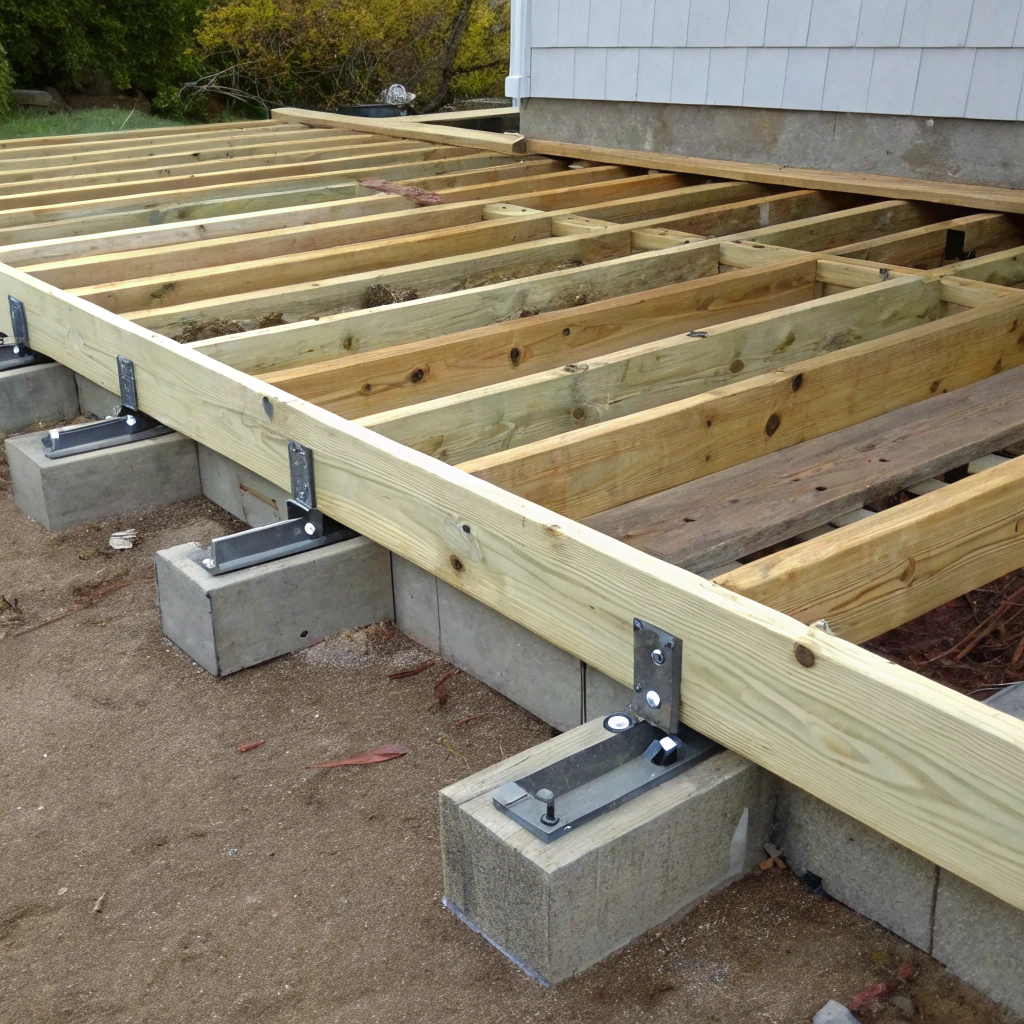
What goes beneath the deck is just as important as what goes on top. Adelaide’s soil conditions vary significantly across the metro area and Hills, which means subframe and footing decisions need to be made for the specific site — not taken from a generic playbook.
Treated Pine vs Steel Subframes
Treated pine subframes are cost-effective and widely used for ground-level and low-rise deck applications. Steel subframes are the better choice for elevated, multi-level, and Hills builds where structural load and longevity demands are higher. Both are legitimate options — the right choice depends on your site, your deck height, and how long you want the structure to last.
Footing Types and Adelaide Soil Conditions
Adelaide’s soils vary widely — reactive clay in southern and northern suburbs, rocky ground through the Hills, sandy coastal soils around Glenelg and Semaphore. Footing type and depth are selected based on site conditions and AS 2870 standards for footing design. That’s why a proper site assessment matters before construction begins — what works in Morphett Vale won’t necessarily work in Stirling.
Managing Tannin Bleed — What to Expect and How to Handle It
New Merbau releases tannins naturally, and in the first several months these can stain surrounding concrete, pavers, and pool surrounds if the deck isn’t managed correctly from day one.
The good news is that tannin bleed is controllable. With correct initial sealing, proper end-grain treatment, and managed weathering in the early months, it doesn’t have to be a problem. A builder who knows Merbau will have a clear plan for handling it from the first day on site.
Practical steps — sealing cut ends immediately, applying an initial oil coat promptly, and directing runoff away from pavers where possible — keep it well within manageable territory.
Tannin bleed is a sign of the timber’s natural density and richness. It settles significantly after the first season and shouldn’t put you off an otherwise excellent timber.
Finishing, Sealing and Ongoing Maintenance for Merbau Decks in Adelaide
A well-built Merbau deck is a significant investment. The maintenance routine that follows installation is what protects it.
Initial Sealing and First-Year Care
Merbau should be sealed promptly after installation — Adelaide’s UV intensity means an unsealed deck can dry out and crack faster than most homeowners expect. The first-year routine covers an initial oil application, monitoring tannin bleed through the first wet season, and a recoat once the timber has fully settled. It’s straightforward once you know what to expect.
Long-Term Maintenance in Adelaide’s Climate
An established Merbau deck typically needs oiling once or twice a year depending on sun exposure and finish choice. Adelaide’s dry heat and UV intensity mean oiling intervals are shorter here than in more temperate climates. Regular cleaning and a periodic surface inspection round out the routine. It’s a modest commitment for a deck that will hold its appearance and structural integrity for decades.
Where We Build — Adelaide Suburbs and Properties We Service
We build Merbau decks across Greater Adelaide — southern suburbs including Aberfoyle Park, Morphett Vale, and Flagstaff Hill, Hills properties in Stirling, Aldgate, and Crafers, inner-ring suburbs like Burnside, Norwood, and Unley, coastal areas including Glenelg, Henley Beach, and Semaphore, and northern suburbs through Golden Grove and Salisbury Heights.
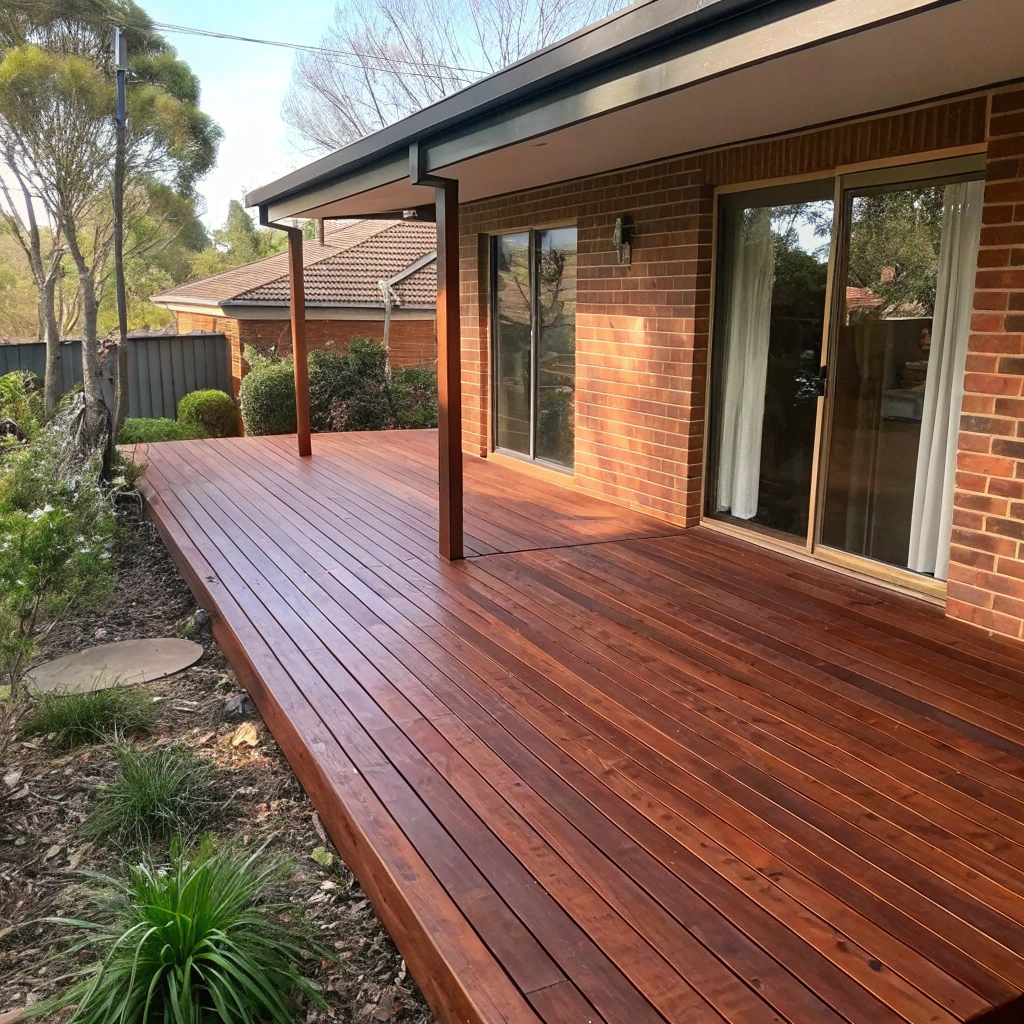
The builds vary as much as the suburbs do — elevated multi-level decks on sloped Hills blocks, pool deck and entertaining area builds along the coast, and alfresco extensions on character homes in the inner ring.
Whatever the site, the approach is the same — a proper assessment first, material recommendations matched to local conditions, and construction built to last.
Frequently Asked Questions About Merbau Deck Construction in Adelaide
Yes. Merbau performs well in Adelaide’s hot, dry conditions. Its Class 2 durability rating and natural stability under heat make it one of the most reliable timber choices for South Australian backyards.
A well-built and properly maintained Merbau deck will last 25 to 40 years. The timber’s natural durability means it holds up well without needing chemical treatment to perform.
Yes, and we do this as part of our installation process. Sealing promptly after installation — particularly in Adelaide’s UV-intense summers — protects the timber and reduces tannin bleed significantly.
Tannin bleed is a natural characteristic of new Merbau where the timber releases compounds that can stain surrounding pavers and concrete. We manage it through correct sealing and end-grain treatment from day one. It settles considerably after the first season.
Typically once or twice a year depending on sun exposure and your chosen finish. Adelaide’s UV intensity means the oiling interval is shorter here than in cooler, wetter climates.
It depends on the site. We use treated pine subframes for ground-level and low-rise builds, and steel subframes for elevated, multi-level, and Hills properties where structural demands are higher.
Ready to Build Your Merbau Deck in Adelaide?
We offer a free on-site quote that covers everything — a site assessment, material samples brought directly to your property, and a full written quote covering the complete construction scope.
No pressure, no obligation. Just a clear picture of what your deck will cost and how it will be built.
Book Your Free On-Site Quote
0882465412
Servicing all Adelaide metro suburbs, Hills face zone, and coastal areas.
