
ModWood Composite Decking in Adelaide – Low Maintenance Timber Alternative

There’s a backyard in Burnside that used to eat weekends. Every spring, same story — sand it back, oil it, wait for it to dry, wonder why you bothered. The deck looked great for about six weeks. Then Adelaide’s summer got hold of it. By February it was grey, dry, and already due for another round.
That’s the reality for a lot of Adelaide homeowners. Timber decks are beautiful. They’re also demanding. And for busy households, rental property owners, and design-conscious buyers across the inner suburbs and coastline, that ongoing maintenance equation just doesn’t add up anymore.
ModWood changes that. It’s Australia’s leading composite decking brand — locally manufactured, engineered specifically for Australian conditions, and built to handle everything from Henley Beach salt air to Gawler’s scorching January heat.

Why Adelaide Homeowners Are Choosing ModWood
ModWood isn’t just another composite product imported from overseas and retrofitted to the Australian market. It’s made here, designed here, and tested against the same conditions your deck will face — the UV intensity, the temperature swings, the coastal humidity. That local origin matters more than most people realise.
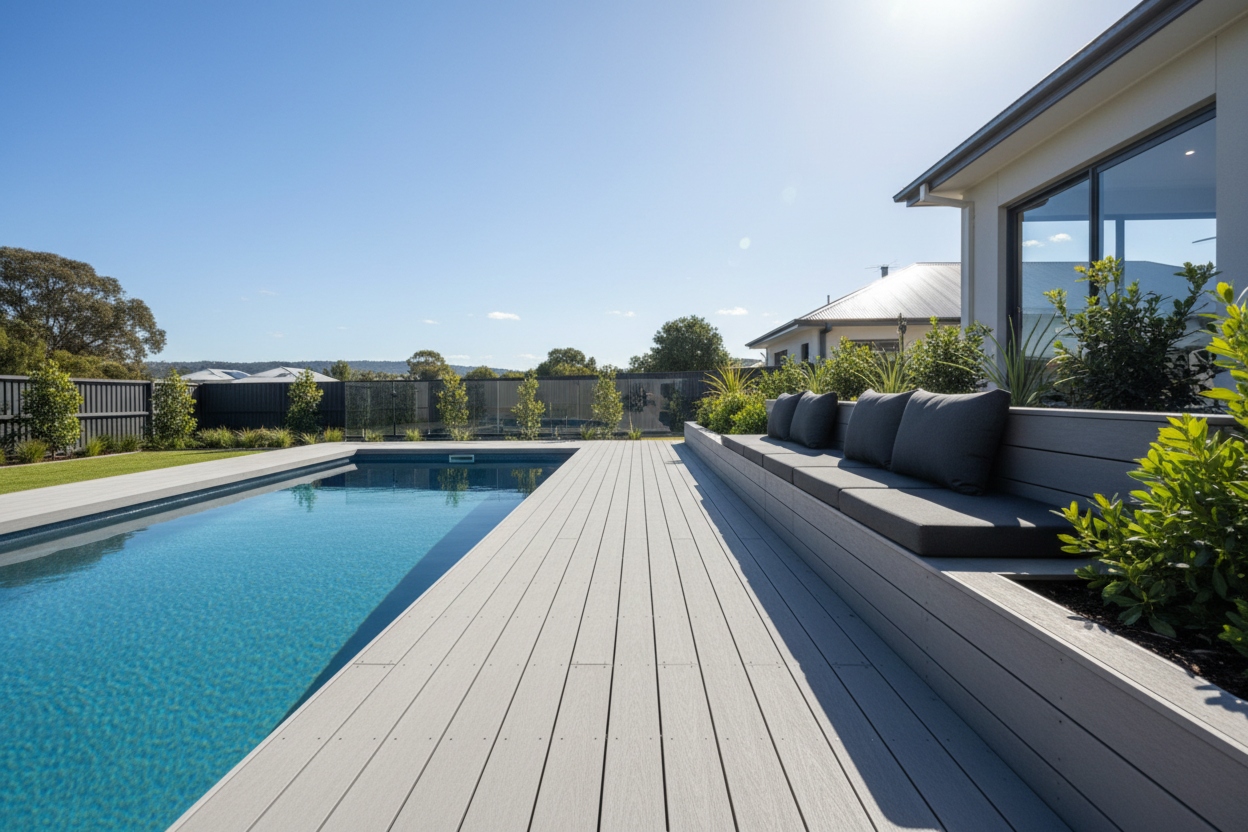
How ModWood Performs Across Adelaide's Suburbs
In northern suburbs like Gawler, Angle Vale, and Munno Para, summer surface temperatures on full-sun decks can be punishing. ModWood’s composition handles heat exposure better than most treated pine alternatives, and its colour stability means boards that face north all day won’t fade to an uneven, washed-out finish after two summers. Lighter colour selections also manage surface temperature better in full-sun applications — worth discussing during your consultation.
Along the coast — Henley Beach, West Beach, Semaphore, Grange — salt air is the silent destroyer of outdoor timber. Moisture penetration, salt crystal expansion, and the cycling wet-dry conditions that coastal exposure creates will shorten a treated pine deck’s lifespan significantly. ModWood doesn’t absorb moisture. It won’t swell, won’t rot, and won’t give salt air the foothold it needs to cause structural damage. For homes within a kilometre of the water, composite is the practical choice.
How ModWood Deck Installation Works
Getting ModWood right isn’t just about the boards — it’s about everything underneath and around them. Correct installation by an experienced deck builder is what separates a deck that performs flawlessly for 25 years from one that causes warranty headaches in year three.
Subframe Requirements and Joist Spacing
ModWood composite boards require a correctly spaced subframe to perform as specified. Joist spacing for composite decking is typically closer than standard timber-to-timber construction — generally 450mm centres for most ModWood profiles, and tighter again for diagonal or picture-frame laying patterns. Getting this right from the start is non-negotiable.
Hidden Clip Fixing for a Clean Boardwalk Finish
ModWood installs using a hidden clip fixing system rather than face screws. Clips slot between boards during installation, holding each board firmly while keeping the surface completely clear of visible fasteners. The result is a clean, uninterrupted boardwalk finish that reads as considered and deliberate — not patched together.
Expansion Gap Allowances for Adelaide’s Temperature Range
Adelaide’s climate runs a significant temperature differential between a January afternoon in Angle Vale and a July morning in the Hills. Composite boards expand and contract with that range, and correct expansion gap allowances at board ends and perimeters accommodate that movement.
Fascia Board Finishing for a Polished Edge Detail
The edge of a deck is what visitors see first. ModWood fascia boards cap the subframe and board ends cleanly, hiding the structural skeleton and delivering a finished edge that looks intentional. It’s the difference between a deck that looks built and a deck that looks designed.
Get Your Free ModWood Consultation Across Greater Adelaide
We service the full Greater Adelaide area — from the Hills through the inner suburbs, across the northern growth corridor, and down the coast. Every project starts with a free on-site consultation where we assess your space, walk you through ModWood colour and profile options with physical samples in hand, and give you a clear, itemised quote with nothing hidden.
You don’t have to guess at colours from a website. You’ll see the actual boards in your actual outdoor environment — morning light, afternoon sun, whatever your deck faces — before you commit to anything.
Call us or submit an enquiry through the contact form and we’ll be in touch to lock in a time that works for you. Most consultations are booked within the week.
FAQs About ModWood Deck Installation in Adelaide
How long does a ModWood deck installation typically take in Adelaide?
For a standard ground-level deck in suburbs like Morphett Vale or Mitcham, most installations are completed in two to four days once materials are on-site. Elevated builds or larger entertaining areas — common in the Hills suburbs — can run to a week depending on access and subframe complexity. I always factor in Adelaide’s weather calendar too, particularly if you’re building through summer when extreme heat days can affect outdoor labour. You’ll get a clear timeline in your quote so there are no surprises.
Does ModWood get too hot to walk on barefoot in Adelaide summers?
It’s a fair question, especially if you’re in a north-facing backyard in Gawler or Angle Vale where surface temperatures can be brutal from December through February. ModWood does retain some heat in full direct sun — all hard surfaces do — and lighter colour selections perform noticeably better in high-exposure applications. I generally recommend Driftwood or lighter-toned profiles for north and west-facing decks in Adelaide’s hotter northern and inland suburbs. Shade from a pergola or sail also makes a significant difference if entertaining comfort is a priority.
Will I need council approval for a ModWood deck in Adelaide?
Most ground-level decks under one metre in height fall within South Australia’s complying development provisions and don’t require a full council application. That said, elevated decks in the Hills, builds close to property boundaries, or projects in heritage overlay zones — which cover a lot of inner suburbs like Norwood and Unley — can trigger approval requirements. I always check your specific site conditions and council zone before we start, because getting caught out after the build is a headache nobody needs. It’s one of the first things I sort out during the on-site consultation.
Can ModWood be installed over an existing concrete slab alfresco?
Yes, and it’s actually one of the more common installations I do across Adelaide’s newer northern suburbs like Angle Vale and Munno Para West where builders deliver a bare concrete alfresco as standard. A treated timber or steel subframe is fixed over the slab to create the correct joist spacing and a level surface, then the ModWood boards go down on top. This approach gives you the composite finish without demolishing the slab, which keeps costs down and the timeline tighter. The key is making sure drainage is accounted for in the subframe design so water doesn’t pond beneath the boards.
How does ModWood hold up in Adelaide's coastal suburbs?
Genuinely well — it’s one of the strongest arguments for composite over timber in areas like Semaphore, West Beach, and Henley Beach. Salt air gets into timber through any breach in the surface coating, and once moisture and salt are cycling through the board, degradation accelerates quickly. ModWood doesn’t absorb moisture, so there’s nothing for salt air to exploit. I’ve installed composite decks within fifty metres of the water at Grange and they look the same three years later as they did the day they went down.
What warranty does ModWood carry and does installation affect it?
ModWood carries a 25-year warranty on their composite decking boards, which is one of the strongest product warranties in the Australian market. The catch — and it’s an important one — is that warranty validity depends on the deck being installed to ModWood’s published specifications, including correct joist spacing, expansion gaps, and approved fixing systems. That’s exactly why choosing an installer who actually knows the product matters, because a warranty on boards installed incorrectly isn’t worth the paper it’s printed on. I install to spec every time, and I can provide full documentation confirming compliance if you ever need to make a claim.
